 |
||||
|
 |
|
|
|
Click here to view all Upcoming Events// IFF Directors Talks
IFF Directors Talks 2012 // Previous IFF Lectures THE MOSELY SNOWFLAKE SPONGE THE ART OF ITERATION MAKING SPACE IFF Director Margaret Wertheim speaks at Art Center College of Design Captain Charles Moore Talks About Plastic Trash IFF Director Margaret Wertheim Seeing Anew [IFF-L20] Structural Considerations of the Business Card
Sponge[IFF-L17] Where the Wild Things Are 2: Things That Think: Where the Wild Things Are: Crocheting the Hyperbolic Plane: Darwinism on a Desktop: The Logic Alphabet Why Things Don't Fall Down Kindergarten: Crocheting the Hyperbolic Plane [IFF-L5] The Mathematics of Paper Folding [IFF-L4] The Physics of Snowflakes [IFF-L3] Crocheting the Hyperbolic Plane [IFF-L2] The Figure That Stands Behind Figures: // Previous Events Crochet Hyperbolic Workshop
|
The Institute
for Figuring Tuesday, April 26 @ 7:00pm
|
|||
  |
||||
| Kindergarten – “the
garden of children” – is one of the most pervasive institutions
in existence: Googling the word Kindergarten yields 11 million results,
Christianity 13 million. But the kindergarten most of us experienced
as infants is a diluted version of what originated as a radical
and highly spiritual system of abstract-design activities whose
universal, alternative language of geometric form aimed to cultivate
children’s innate ability to observe, reason, express and
create. As practiced initially, the aim of kindergarten was “to
instill in children an understanding of what an earlier generation
would have called ‘the music of the spheres’ –
the mathematically generated logic underlying the ebb and flow of
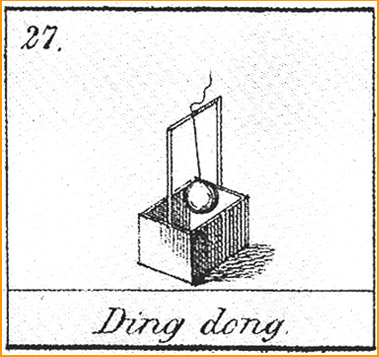
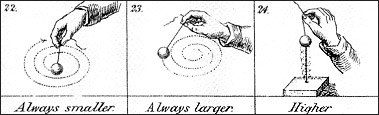
creation.” // In his book "Inventing Kindergarten" Norman Brosterman argues that within this lost world of women and children we can locate the seedbed of modern art. With its emphasis on abstract decomposition and building up from elemental forms, the original kindergarten system of the mid-nineteenth century created an education and design revolution that profoundly affected the course of modern art and architecture, as well as physics, music, psychology and the modern mind itself. In this lecture Brosterman will discuss the history of kindergarten and its influence on such modernist giants as Frank Lloyd Wright, Wassily Kandinsky, Piet Mondrian, Le Corbusier and the Bauhaus school. |
||||
 |
||||
An architect, collector, curator and wood carver, Norman Brosterman became interested in Friedrich Froebel’s kindergarten system while compiling one of the world’s finest collections of children’s building blocks and construction toys. He is also the author of "Out of Time: Designs for the Twentieth Century Future", a book about science fiction visions of futures past. Brosterman’s collection of building blocks became the basis for the “Potential Architecture” exhibition at the Canadian Center for Architecture in Montreal and his collection of sci-fi drawings was the basis for a Smithsonian Institution traveling show. // This lecture series is supported by a grant from the Annenberg Foundation. |
||||
|
|
||||
| © 2003–2018 The Institute For Figuring | ||||